Sleep Apnea Treatment Options in Hamden, CT
CPAP is not your only choice. From custom oral appliances to habit changes that actually stick, here is how we help patients breathe better at night.
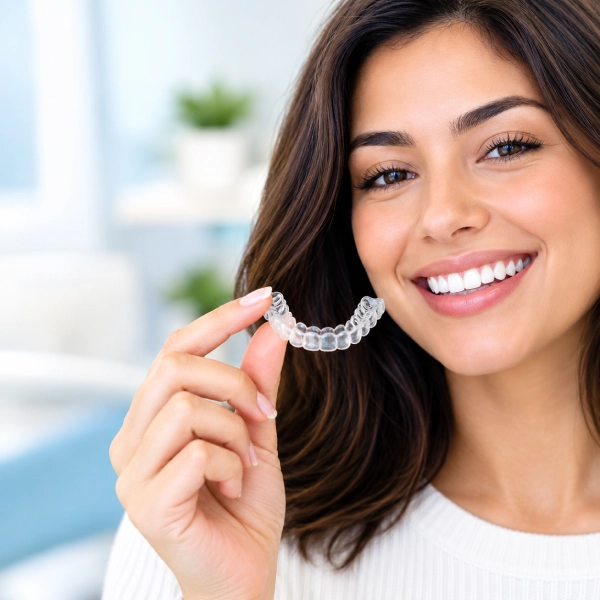
Custom Oral Appliance Therapy
An oral appliance for sleep apnea works like a precision mouthguard. Worn only while you sleep, it gently moves your lower jaw forward and stabilizes your tongue, which keeps the tissue at the back of your throat from collapsing — the event that causes apnea and most snoring.
Every appliance we fabricate is custom-made from a digital scan of your teeth, so it fits the way a sports mouthguard fits an athlete: snug, comfortable, and made for exactly one mouth. There are no hoses, no masks, and no machine noise — which is why travel, camping, and side-sleepers tend to love it.
- Fits over your teeth like a thin mouthguard — no straps or air pressure
- Clinically recommended for mild-to-moderate OSA and CPAP intolerance
- Pocket-sized and TSA-friendly — it goes wherever you do
- Adjusted in small increments so your jaw stays comfortable
Every Path to a Quieter, Deeper Night
There is no single treatment that fits everyone. Severity, anatomy, comfort, and even your bed partner's tolerance all matter — so here is the honest picture of each option.
CPAP Therapy
The gold standard for severe apnea: a mask delivers pressurized air that physically splints the airway open. Highly effective — but studies show many users abandon it within months due to discomfort, noise, or claustrophobia.
Oral Appliance
A custom device that repositions the jaw during sleep. Recommended for mild-to-moderate apnea and for former CPAP users who could not stick with it. Easy to travel with and quiet by design.
Lifestyle Changes
Weight loss, side sleeping, alcohol cutback, and treating nasal congestion can meaningfully reduce apnea severity. For some patients with mild OSA, these changes alone are enough — they always help alongside any device.
Positional Therapy
Apnea often worsens on your back, where the tongue falls backward. Wearable sensors or positional devices gently train you to stay on your side — a simple fix when back-sleeping is the main trigger.
Combination Therapy
Many patients do best with more than one tool: an oral appliance plus CPAP at a lower pressure, for example. Lower pressure means a smaller mask and less air leakage — comfort improves for both.
Surgical Options
For selected patients, procedures that remove or reposition obstructing tissue can help. Surgery is typically considered only after other therapies have been tried and reviewed with a sleep physician and ENT specialist.
From First Visit to Better Mornings
Starting treatment is simpler than most people expect. Four unhurried steps, and you are on your way to quieter nights.
Screening & Consultation
We talk through your symptoms, sleep habits, and health history, then run a quick airway and jaw evaluation. If your answers suggest apnea, we point you toward the right sleep study.
Sleep Study
A physician confirms the diagnosis and severity — usually with a take-home monitor you wear for a single night in your own bed. Results decide which treatments are appropriate for you.
Scan & Custom Fabrication
A quick digital scan captures your bite with no impression putty. Your appliance is then fabricated to exact tolerances and checked for fit, comfort, and jaw positioning.
Fitting & Follow-Up
You take the appliance home, wear it nightly, and report back. We fine-tune the jaw position over a few visits, confirm your symptoms are improving, and keep the fit healthy long-term.
Oral Appliances Work Best When…
No device is right for every airway. These are the situations where a custom appliance tends to deliver its best results.
Your Apnea Is Mild to Moderate
Sleep study results in the mild-to-moderate range are exactly what oral appliance therapy was designed for — with success rates that rival CPAP in compliant users.
You Cannot Tolerate CPAP
If your mask sits in a drawer, you are effectively untreated. An appliance you will actually wear every night beats a machine you will not, every time.
You Primarily Snore
Habituial snorers without severe apnea often see dramatic quieting with an appliance — which may be the greatest gift a bed partner has ever received.
You Have Most of Your Teeth
Appliances anchor to your natural teeth, so adequate dentition and reasonably healthy gums give the device the support it needs to work reliably.
One Important Caveat
Severe apnea with significant oxygen desaturation usually calls for CPAP first. Bring your sleep study to the consultation — if an appliance is not the right tool, we will tell you plainly and help you find what is.
Questions About Treatment
The details patients ask about before committing to therapy.
Does an oral appliance really work as well as CPAP?
Will the appliance damage my teeth or jaw?
How long does it take to get used to wearing it?
How long does the whole process take?
Does Medicare or private insurance cover it?
Find Out Which Option Fits You
Bring your sleep study — or start from scratch. We will walk you through the choices with no pressure and no jargon, so you can decide with confidence.