

Quick Answer
When a badly damaged or infected tooth can be restored successfully, a root canal is usually preferred because it preserves the natural tooth. Extraction may be the better option when the tooth cannot be repaired predictably. The condition of your individual tooth — not the name of the procedure — drives the right choice, so a dental examination is the essential first step.
Best for:
Patients with deep decay, infection, or a badly damaged toothDecision factor:
Whether the tooth can be predictably restoredKey goal:
Save the natural tooth when possibleOn This Page
When a tooth starts hurting, even simple things like eating, drinking, or sleeping can become uncomfortable. If your dentist finds deep decay, an infection, or damage inside a tooth, you may hear two treatment options: a root canal or a tooth extraction.
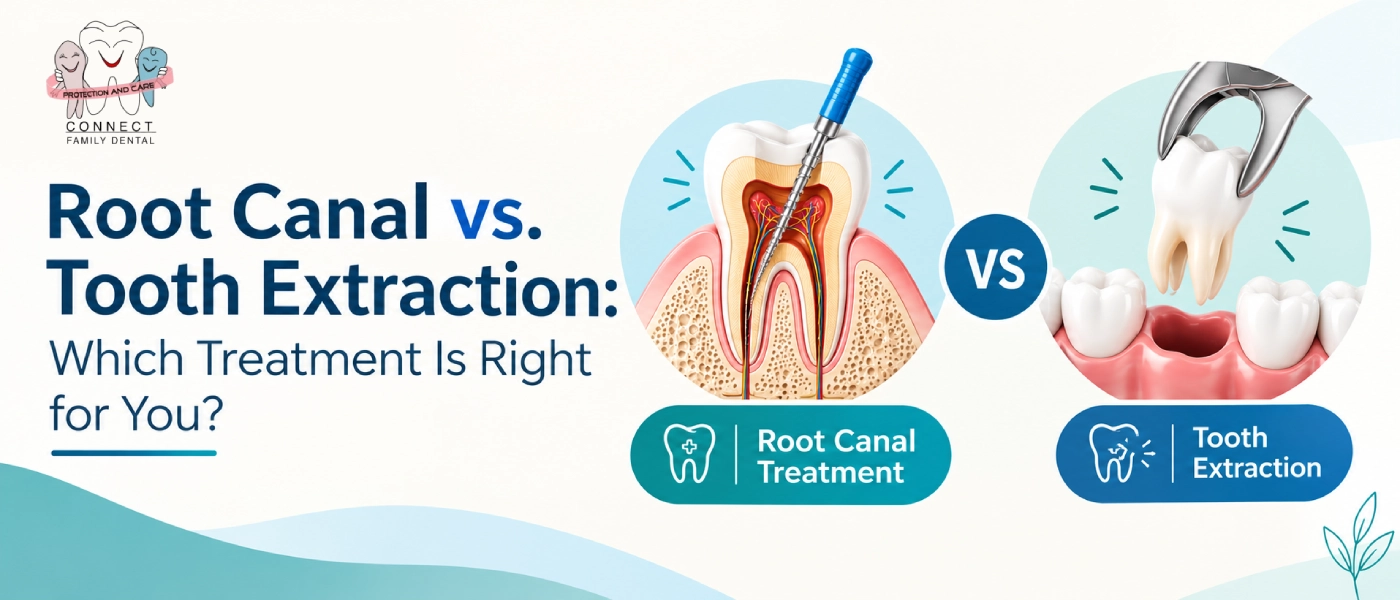
Both treatments can help address dental problems, but they work in different ways. A root canal is intended to remove infected or inflamed tissue from inside a tooth and preserve the remaining natural structure. A tooth extraction removes the tooth when it cannot be saved or when removing it is the most appropriate treatment.
So, which is better: a root canal or tooth extraction? The answer depends on the condition of your tooth, the extent of the damage, your overall oral health, and whether the tooth can be restored successfully.
For patients looking for root canal treatment in Hamden, CT, understanding these options can make it easier to have an informed conversation with a dentist.
In this guide, we explain the differences between a root canal and tooth extraction, when each treatment may be recommended, what recovery looks like, how costs can vary, and what to consider before making a decision.
What Is a Root Canal?
A root canal is a dental procedure used to treat infection or inflammation in the pulp, the soft tissue inside a tooth that contains nerves and blood vessels.
Deep cavities, cracks, repeated dental procedures, and injuries can damage the pulp. When this happens, bacteria may enter the inner part of the tooth and cause infection.
During root canal treatment, the dentist removes the affected pulp, cleans and disinfects the inside of the tooth, and seals the space with a filling material. The tooth is then restored to help it function normally.
Depending on the tooth's condition, the final restoration may be a filling or a dental crown. Back teeth often need crowns because they experience substantial chewing forces.
When Is a Root Canal Recommended?
A dentist may recommend root canal treatment when the inside of a tooth is irreversibly inflamed or infected but enough healthy tooth structure remains to restore it.
Common reasons include:
- Deep tooth decay that reaches the pulp.
- Persistent tooth pain associated with pulp damage.
- A cracked or injured tooth affecting the pulp.
- An infection around the root of the tooth.
- Prolonged sensitivity to hot or cold that requires further evaluation.
- Swelling or tenderness associated with an infected tooth.
Not every toothache requires a root canal. Similar symptoms can occur with cavities, gum problems, cracked teeth, or other conditions. A dental examination and, when appropriate, X-rays help determine the cause.
Benefits of Root Canal Treatment
The main advantage of a root canal is that it may allow you to keep your natural tooth.
Other potential benefits include:
- Maintaining your natural bite and chewing function.
- Avoiding removal of the tooth.
- Preventing the need for a replacement tooth solely because of that extraction.
- Helping address infection inside the tooth.
- Supporting the appearance and function of your smile when followed by an appropriate restoration.
A root canal does not make a tooth indestructible. The tooth can still develop new decay, crack, or require further treatment. Proper restoration and daily oral hygiene remain important.
What Is a Tooth Extraction?
A tooth extraction is the removal of a tooth from its socket in the jawbone.
Dentists try to preserve natural teeth whenever practical, but extraction may be the better option when a tooth is too damaged to restore, has a poor long-term prognosis, or cannot be treated successfully with other methods.
Some extractions are straightforward. Others, including certain broken teeth or impacted wisdom teeth, require a surgical approach.
When Is Tooth Extraction Recommended?
A dentist may recommend removing a tooth for several reasons:
- Severe decay has destroyed too much of the tooth to support a restoration.
- A fracture extends too far below the gumline.
- Advanced gum disease has caused substantial supporting bone loss.
- A tooth cannot be restored predictably after an infection or injury.
- A wisdom tooth is impacted or causing specific problems.
- An extraction is part of a carefully planned orthodontic or other dental treatment.
An infection alone does not automatically mean a tooth must be extracted. Depending on the circumstances, root canal treatment or another approach may still be possible.
Your dentist will assess the tooth's structure, supporting bone, gum health, and overall prognosis before recommending treatment.
Benefits of Tooth Extraction
When a tooth cannot be saved, extraction can remove the source of a dental problem and provide a path toward further treatment.
Potential benefits include:
- Removing a tooth that is beyond repair.
- Addressing certain sources of pain and infection.
- Preventing continued damage from a severely compromised tooth.
- Allowing a dentist to plan appropriate replacement options when needed.
However, extraction leaves a space unless the tooth is replaced or the situation is otherwise managed. Depending on the location of the missing tooth and your dental health, the dentist may discuss an implant, a bridge, a partial denture, or other options.
Root Canal vs. Tooth Extraction: Key Differences
Although both procedures may be used to address a severely damaged tooth, they have different goals.
| Factor | Root Canal | Tooth Extraction |
|---|---|---|
| Main purpose | Treat the inside of the tooth and preserve it | Remove the affected tooth |
| Natural tooth | Keeps the tooth in place | Removes the tooth |
| Treatment | Clean, disinfect, and seal the root canals | Remove the tooth from its socket |
| Final restoration | Filling or crown may be needed | Replacement may be considered |
| Recovery | Mild tenderness may occur for several days | Gum and socket healing takes time |
| Long-term care | Maintain the tooth and its restoration | Care for the extraction site and consider replacement when appropriate |
| Best suited for | Teeth that can be predictably restored | Teeth that cannot be saved or are better removed |
Neither option is automatically the right choice for everyone. The condition of the individual tooth matters more than the name of the procedure.
Is a Root Canal Better Than Pulling a Tooth?
When a tooth can be saved and restored successfully, preserving it with root canal treatment is often preferred. Natural teeth help maintain normal chewing function and the existing arrangement of neighboring teeth.
However, saving a tooth is not always possible or practical. If the tooth has extensive structural damage, severe supporting bone loss, or a fracture that makes restoration unreliable, extraction may be the more appropriate choice.
Consider these situations:
A root canal may be preferable when:
- The tooth has an infected or damaged pulp.
- The remaining tooth structure is strong enough for restoration.
- The supporting bone and gums provide adequate support.
- The dentist believes the tooth has a reasonable long-term prognosis.
Extraction may be preferable when:
- The tooth is fractured beyond repair.
- Extensive decay leaves too little healthy structure.
- Advanced periodontal disease has severely compromised the tooth.
- Previous treatment has failed and predictable retreatment is not possible or appropriate.
Ask your dentist whether the tooth can be restored, how predictable the treatment is, and what the alternatives would involve. A clear explanation of the likely outcome can help you make a decision that fits your dental needs.
Does a Root Canal Hurt More Than a Tooth Extraction?
Many patients worry about pain before either procedure. The good news is that both root canal treatment and tooth extraction are generally performed with local anesthesia to numb the treatment area.
During treatment, you may feel pressure or movement, but you should not expect sharp pain. Tell your dentist if you feel discomfort so they can assess whether additional anesthesia or another adjustment is needed.
Pain During a Root Canal
A root canal is designed to treat the source of pain caused by inflamed or infected pulp. The tooth and surrounding tissues may remain tender after the procedure, particularly if infection or inflammation was present before treatment.
This discomfort often improves over the following days. Follow your dentist's aftercare instructions and ask which pain-relief options are appropriate for you. Our root canal aftercare guide explains what to expect after treatment.
Pain During Tooth Extraction
During an extraction, the dentist numbs the area before removing the tooth. You may feel pressure, but the procedure should not cause sharp pain when anesthesia is effective.
Afterward, soreness, swelling, and mild bleeding can occur. The amount of discomfort depends on the tooth, the complexity of the extraction, and your individual healing response.
Neither procedure is guaranteed to be painless throughout recovery. Your dentist can explain what to expect based on your specific situation.
Root Canal Recovery vs. Tooth Extraction Recovery
Recovery differs because a root canal preserves the tooth while an extraction creates a socket that must heal.
What to Expect After a Root Canal
After root canal treatment, the tooth may feel sensitive or tender for several days, especially when biting. Your dentist may recommend avoiding hard foods on that side until the permanent restoration is completed.
If a temporary filling has been placed, attend the recommended follow-up appointment. Delaying the final restoration can leave the tooth vulnerable to fracture or contamination.
Contact your dentist if pain becomes severe, swelling develops, your bite feels uneven, or symptoms do not improve as expected.
What to Expect After a Tooth Extraction
After an extraction, a blood clot forms in the socket and helps protect the underlying tissues while healing begins.
Your dentist may recommend:
- Biting gently on gauze as directed to control bleeding.
- Eating soft foods during the early recovery period.
- Avoiding smoking and vaping.
- Avoiding straws and vigorous rinsing during the initial healing period, as instructed.
- Keeping the area clean according to your dentist's instructions.
- Taking prescribed or recommended medications only as directed.
Healing time varies with the type of extraction, the tooth's location, and individual health factors. Our tooth extraction aftercare guide covers recovery in more detail.
Severe or worsening pain, persistent bleeding, increasing swelling, fever, or other concerning symptoms should be reported to your dentist. Significant facial swelling or difficulty breathing or swallowing requires immediate emergency medical care.
Root Canal Cost vs. Tooth Extraction Cost in Hamden, CT
The cost of a root canal compared with tooth extraction depends on several factors. These include which tooth needs treatment, the complexity of the procedure, the restoration required, and your dental insurance coverage.
A root canal may involve the cost of the procedure itself, followed by a filling or crown. An extraction may cost less initially in some cases, but the total cost can change if you decide to replace the missing tooth.
Possible replacement treatments include:
- Dental implant: A replacement tooth supported by an implant placed in the jawbone.
- Dental bridge: A restoration that fills the gap and uses neighboring teeth or implants for support, depending on the design.
- Partial denture: A removable appliance used to replace one or more missing teeth.
Not every extracted tooth requires replacement in every circumstance, but leaving a gap can affect chewing, appearance, or the position of other teeth depending on its location.
If you are comparing root canal and tooth extraction costs in Hamden, CT, ask for an explanation of the full treatment plan rather than comparing only the initial procedure fees.
Questions worth asking include:
- What is the total estimated cost of each option?
- Will the tooth need a crown or another restoration?
- What replacement options would be appropriate after extraction?
- What does my dental insurance cover?
- Are follow-up visits included in the estimate?
A dental examination is necessary to determine which treatments are suitable and provide a meaningful cost estimate.
What Happens If You Delay Treatment for an Infected Tooth?
Ignoring a painful or infected tooth can allow the underlying problem to worsen. The infection may spread into nearby tissues, and a tooth that might initially have been restorable may become more difficult to save.
Possible warning signs include persistent or worsening tooth pain, swelling around the gums, pain when chewing, a bad taste in the mouth, or a pimple-like bump on the gum.
Some dental infections cause little pain at first, so the absence of severe discomfort does not necessarily mean the problem is harmless.
If you suspect an infected tooth, contact a dentist promptly. Antibiotics alone generally do not eliminate the source of infection inside a tooth. Depending on the diagnosis, treatment may involve root canal therapy, drainage, extraction, or another appropriate procedure.
Seek emergency medical care immediately if you have difficulty breathing or swallowing or significant swelling that may threaten your airway.
Can You Avoid a Root Canal or Tooth Extraction?
Not every dental problem can be prevented, but consistent preventive care can reduce the risk of decay, infection, and damage.
Here are practical steps to protect your teeth:
Brush twice a day. Use fluoride toothpaste and brush for two minutes each time.
Clean between your teeth daily. Floss or use another appropriate interdental cleaner to remove plaque from areas a toothbrush may miss.
Limit frequent sugary snacks and drinks. Repeated exposure to sugar increases the risk of tooth decay.
Attend regular dental checkups. Your dentist can identify cavities, cracks, and other concerns before they become more extensive.
Wear a mouthguard when appropriate. A properly fitted sports mouthguard can help reduce the risk of dental injuries during contact sports.
Do not ignore symptoms. Persistent sensitivity, tooth pain, swelling, or a damaged tooth deserves professional attention.
Preventive care cannot eliminate every dental problem, but it can help protect your natural teeth and reduce the likelihood of needing more extensive treatment.
Root Canal Treatment in Hamden, CT: Where to Start
If you have tooth pain, a damaged tooth, or concerns about a possible infection, a dental examination is the best starting point. A dentist can assess the tooth, review any necessary X-rays, and explain whether a root canal, extraction, or another treatment is appropriate.
At Connect Family Dental, patients can contact the office to ask about dental examinations and treatment options for tooth pain and damaged teeth.
Connect Family Dental
Address: 953 Dixwell Ave, Hamden, CT 06514
Phone: (203) 745-4244
Website: Connect Family Dental
If you are searching for a root canal dentist in Hamden, CT, call the office to ask about appointment availability and the next steps for evaluating your dental concern.
The goal is to understand what is causing the problem, whether the tooth can be saved, and which treatment offers the most appropriate outcome for your situation.
Frequently Asked Questions
Is it better to get a root canal or have a tooth pulled?
If the tooth can be restored successfully, a root canal may be the preferred option because it preserves your natural tooth. Extraction may be recommended when the tooth is too damaged to repair or has a poor long-term prognosis. A dentist can evaluate the tooth and explain the benefits and limitations of both options.
Is a root canal more expensive than an extraction?
The initial cost of a root canal may be higher than a simple extraction in some cases. However, the total cost depends on the tooth, required restoration, insurance coverage, and whether a replacement tooth is needed after extraction. Compare the full treatment plans before deciding.
How long does a root canal take?
Treatment time depends on the tooth, the complexity of its root canals, and the extent of the infection or damage. Some root canals can be completed in one visit, while others require multiple appointments. Your dentist can give you a more specific estimate after examining the tooth.
How long does it take to recover from a tooth extraction?
Initial soreness and swelling often improve over several days, but complete healing takes longer and varies by extraction type. Surgical extractions may require more recovery time. Follow your dentist's instructions and contact the office if symptoms worsen rather than improve.
Can a tooth infection go away without treatment?
A dental infection generally requires professional treatment to address its source. Pain may temporarily improve even when the underlying problem remains. Contact a dentist if you suspect an infection, and seek immediate emergency care for difficulty breathing or swallowing.
Do you need a crown after a root canal?
Not every tooth requires a crown, but many back teeth benefit from one because they experience strong chewing forces. The type of restoration depends on how much healthy tooth structure remains, the tooth's location, and the risk of fracture.
What happens if you do not replace an extracted tooth?
The effects depend on the tooth's location and your overall bite. Some gaps can affect chewing, appearance, or the position of neighboring teeth. Your dentist can explain whether replacement is recommended and compare implants, bridges, and partial dentures when appropriate.
Can a root canal fail?
Yes. A root canal-treated tooth can develop new decay, a fracture, or persistent or recurring infection. Depending on the cause, retreatment, a surgical procedure, or extraction may be considered. Regular dental care and an appropriate final restoration help protect the tooth.
When should I see an emergency dentist for tooth pain?
Seek prompt dental care for severe or worsening tooth pain, swelling, a broken tooth, or suspected infection. If you have difficulty breathing or swallowing or significant facial swelling, seek emergency medical care immediately.
Where can I get root canal treatment in Hamden, CT?
Connect Family Dental is located at 953 Dixwell Ave, Hamden, CT 06514. Call (203) 745-4244 to ask about appointment availability and evaluation of your dental concern.
Final Thoughts
Choosing between a root canal and tooth extraction depends on the condition of your tooth and whether it can be restored successfully. A root canal can preserve a natural tooth when the remaining structure and supporting tissues are suitable. Extraction may be the better option when a tooth cannot be repaired predictably.
The most important step is to get an accurate diagnosis instead of deciding based on pain or cost alone. Ask your dentist to explain the available treatments, expected outcomes, recovery, and total costs before moving forward.
If you are experiencing tooth pain or think you may have an infected tooth, contact Connect Family Dental to discuss an examination and appropriate treatment options.
Call (203) 745-4244 to ask about an appointment in Hamden, CT.
Dental Health References
For additional information about root canal treatment and tooth preservation, consult:
- American Association of Endodontists: aae.org/patients
- American Dental Association, MouthHealthy: mouthhealthy.org
- MedlinePlus, Dental Health: medlineplus.gov/dentalhealth.html
This article provides general educational information and is not a substitute for an individual dental examination or professional advice.