

Quick Answer
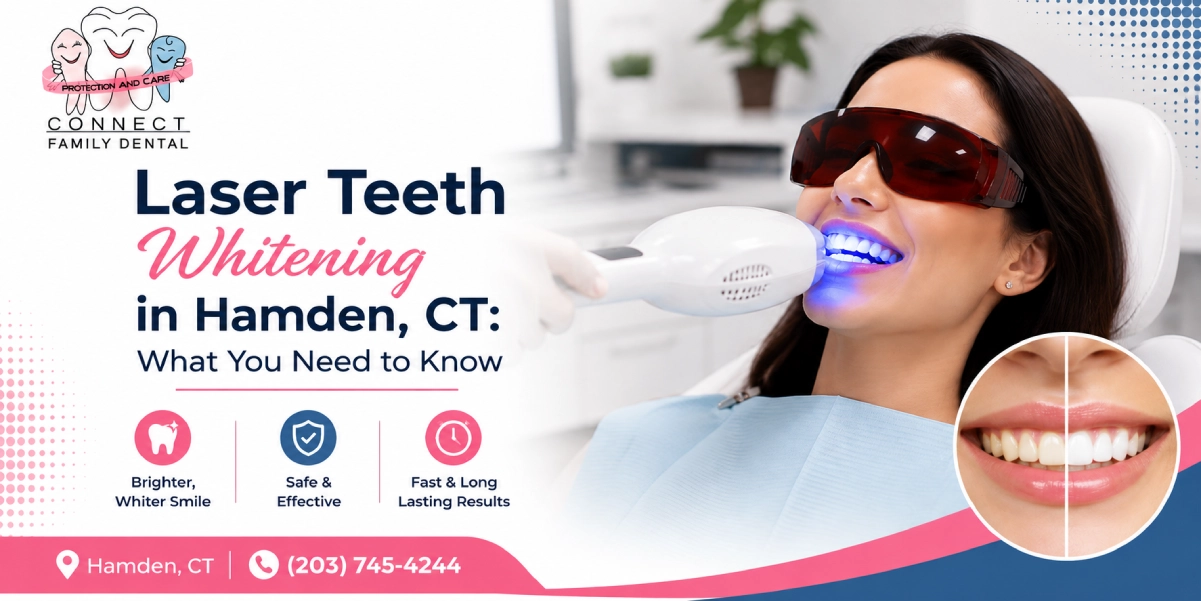
Laser teeth whitening is a professional cosmetic dental treatment that uses a whitening gel activated by a dental light or laser system to help remove surface stains and brighten the appearance of teeth.
Best for:
People looking for professional whitening and a brighter smileTreatment time:
Varies by treatment system and individual needsResults:
Depend on the type of staining, oral health, diet, and aftercareOn This Page
A bright smile can make you feel more confident when you talk, laugh, or take a photo. But teeth do not always stay naturally white. Coffee, tea, tobacco, dark-colored foods, aging, and certain types of staining can change the color of your teeth over time.
Brushing and flossing are important for keeping your mouth healthy, but daily brushing cannot remove every type of discoloration. If your teeth look yellow or stained, professional teeth whitening may be an option.
Laser teeth whitening is a professional cosmetic treatment designed to make natural teeth look brighter. It is performed in a dental office using a professional whitening product. Some treatment systems also use a special light during the procedure.
If you are considering laser teeth whitening in Hamden, CT, knowing what happens during treatment, how it works, how long results can last, and what affects the outcome can help you decide if it is right for you.
What Is Laser Teeth Whitening?
Laser teeth whitening is a professional method of whitening natural teeth.
The treatment generally uses a peroxide-based whitening gel. Depending on the system used by the dental office, a special light may also be used during treatment.
The whitening gel is the main part of the process. Ingredients such as hydrogen peroxide or carbamide peroxide help break down compounds that cause teeth to look darker or yellow.
At Connect Family Dental, teeth whitening is offered as part of the practice's cosmetic dental services. The office also provides cosmetic dentistry and other dental treatments in Hamden, CT.
The exact whitening process can vary depending on the system and your individual needs.
Why Do Teeth Become Yellow?
There are several reasons teeth can become darker over time.
Coffee and Tea
Coffee and tea are two of the most common drinks associated with tooth staining. Their dark pigments can build up on the surface of teeth with frequent use.
If you drink coffee every morning, for example, you may gradually notice that your teeth look less bright than they did several years ago.
Tobacco
Smoking and tobacco products can cause yellow or brown stains. Tobacco can also affect your gums and overall oral health.
If you are trying to improve the appearance of your smile, avoiding tobacco is an important step.
Dark-Colored Foods and Drinks
Red wine, cola, berries, tomato sauce, and other strongly colored foods can contribute to staining.
You do not necessarily have to stop eating these foods, but frequent exposure can make it harder to keep your teeth looking bright.
Aging
Teeth naturally change as you get older.
The outer enamel can become thinner over time. This can make the naturally darker dentin underneath more visible, giving teeth a more yellow appearance.
Plaque and Buildup
Plaque and surface buildup can make teeth look dull.
A professional dental cleaning can remove buildup that regular brushing may miss. If discoloration remains after cleaning, your dentist can discuss cosmetic whitening options.
How Does Laser Teeth Whitening Work?
The treatment is usually completed in several steps.
Step 1: Dental Examination
Before whitening, your dentist should check your teeth and gums.
This is important because whitening is not a treatment for cavities, gum disease, broken teeth, or other dental problems.
If you have untreated dental problems, they may need to be addressed before cosmetic whitening.
Step 2: Check Your Current Tooth Color
Your dentist may check the current shade of your teeth before treatment.
This gives you a reference point when looking at the results later.
It also helps your dentist discuss what kind of improvement may be realistic.
Step 3: Protect the Gums
Whitening products contain active ingredients that can irritate soft tissues.
Your dental team will take steps to protect your gums before applying the whitening material.
Step 4: Apply the Whitening Gel
A professional whitening gel is placed on the teeth.
The peroxide in the gel works on the compounds responsible for discoloration.
Step 5: Use of a Special Light
Some professional whitening systems use a dental light as part of the treatment.
The light is used according to the instructions for the specific whitening system.
It is worth asking your dentist which whitening system is being used and how it works.
Step 6: Remove the Gel and Check the Teeth
Once the treatment period is complete, the whitening material is removed.
Your dentist can then check the appearance of your teeth and discuss the results.
How Much Whiter Will Your Teeth Become?
There is no single result that applies to every patient.
The amount of whitening depends on:
- Your starting tooth color
- The type of stain
- How deep the discoloration is
- Your natural enamel and dentin
- The whitening system used
- How your teeth respond to treatment
Some patients notice a clear change after one professional treatment. Others may need additional treatment.
Your dentist can examine your teeth and explain what kind of result you can reasonably expect.
What Types of Stains Can Whitening Improve?
Professional whitening can help with many common types of discoloration.
It may improve stains caused by:
- Coffee
- Tea
- Tobacco
- Red wine
- Dark-colored foods
- Aging
- Some surface stains
However, not every type of discoloration responds in the same way.
Some stains develop inside the tooth and can be more difficult to treat with traditional whitening. In those cases, your dentist may recommend another cosmetic option.
Is Laser Teeth Whitening Safe?
Professional teeth whitening is generally well tolerated when it is properly performed and the patient's teeth and gums are healthy.
Still, temporary sensitivity is possible.
Tooth Sensitivity
Some patients experience sensitivity after whitening.
Cold drinks, hot foods, or cold air may feel uncomfortable for a short time.
If you already have sensitive teeth, tell your dentist before treatment.
Your dentist can determine whether whitening is appropriate and discuss ways to reduce discomfort.
Gum Irritation
Whitening gel can irritate the gums if it comes into contact with them.
This is one reason professional treatment can be useful. The dental team can carefully control where the whitening material is placed.
If you experience severe or prolonged discomfort after treatment, contact your dental office.
Can You Whiten Crowns and Veneers?
No.
Professional teeth whitening works on natural tooth structure. It does not whiten most crowns, veneers, bridges, or tooth-colored fillings.
This matters if you have dental work on your front teeth.
For example, if you have a crown that matches your current natural tooth color, whitening your natural teeth may make the crown appear darker by comparison.
Your dentist can check your existing dental work before whitening and explain your options.
How Long Does Laser Teeth Whitening Last?
Whitening is not permanent.
New stains can develop as you continue eating and drinking normally.
How long your results last depends on your lifestyle and oral care habits.
Coffee, tea, red wine, tobacco, and dark-colored foods can cause new staining over time.
Good oral hygiene can help maintain your results.
Connect Family Dental's whitening aftercare guidance recommends limiting staining foods and drinks, avoiding tobacco, maintaining regular brushing and flossing, and following recommended touch-up care.
How to Keep Your Teeth White After Treatment
A few simple habits can help maintain your brighter smile.
Brush Twice a Day
Brush your teeth twice daily with fluoride toothpaste.
Use a soft-bristled toothbrush and avoid brushing too aggressively.
Floss Every Day
Cleaning between your teeth removes plaque and food particles that brushing alone cannot reach.
Drink More Water
Rinsing your mouth with water after coffee, tea, or dark-colored foods can help reduce the amount of staining material left on your teeth.
Limit Tobacco
Avoiding tobacco can help reduce new stains and supports better oral health.
Keep Your Dental Appointments
Regular dental cleanings can remove plaque and buildup and allow your dentist to monitor your teeth and gums.
What Should You Eat After Teeth Whitening?
Your dentist may give you specific instructions after your treatment.
For the first day or two, many patients are advised to limit strongly colored foods and drinks.
Examples include:
- Coffee
- Tea
- Red wine
- Dark soda
- Tomato sauce
- Soy sauce
- Berries
- Chocolate
Lighter foods such as rice, pasta, plain yogurt, chicken, turkey, and water are often easier choices immediately after whitening.
Connect Family Dental's current whitening aftercare instructions recommend a lighter diet for the first 24–48 hours and limiting common staining foods and drinks during that period.
Professional Whitening vs. Store-Bought Products
There are many whitening products available at pharmacies and online.
Whitening strips, toothpaste, gels, and other products can help with some types of surface discoloration.
Professional whitening is different because your treatment begins with a dental evaluation.
Your dentist can look for cavities, gum problems, sensitivity, restorations, and other issues before whitening.
Professional treatment can also be a good choice if you want a noticeable change within a shorter period.
The best option depends on your teeth and your goals.
Who Should Consider Professional Teeth Whitening?
Professional whitening may be appropriate if you:
- Have healthy natural teeth
- Have yellow or stained teeth
- Want a brighter smile
- Drink coffee or tea regularly
- Have age-related discoloration
- Want whitening before a special event
- Prefer treatment under dental supervision
Whitening may not be appropriate if you have untreated cavities, active gum problems, severe sensitivity, or other dental concerns.
A dental examination can help determine whether whitening is a good choice.
Is Laser Teeth Whitening Right for You?
If your teeth are healthy but look yellow or stained, professional whitening may be worth considering.
The first step is a dental examination.
Your dentist can identify the cause of your discoloration and explain whether whitening is likely to help. If whitening is not the best option, your dentist can discuss other cosmetic treatments.
For some patients, veneers or other cosmetic dental treatments may provide a better solution for certain types of discoloration.
Connect Family Dental offers teeth whitening alongside cosmetic dentistry and veneers, giving patients several options for improving the appearance of their smiles.
Frequently Asked Questions
How long does laser teeth whitening take?
Treatment time depends on the whitening system and your individual treatment plan. Your dental office can tell you how long your appointment is expected to take before treatment begins.
Does laser teeth whitening hurt?
Whitening is usually well tolerated, but temporary sensitivity can occur. Gum irritation is also possible. Tell your dentist if you already have sensitive teeth.
Can yellow teeth become white again?
Many types of yellow and stained natural teeth can become noticeably lighter with professional whitening. The result depends on the cause and depth of the discoloration.
How long do whitening results last?
Results vary. Diet, oral hygiene, coffee and tea consumption, tobacco use, and other habits can affect how quickly new stains appear.
Can I whiten my crowns or veneers?
No. Whitening changes the color of natural teeth but does not normally change the color of crowns, veneers, or other dental restorations.
Should I get a cleaning before teeth whitening?
A dental cleaning may be helpful because it removes plaque and surface buildup. Your dentist can also check for problems that should be treated before whitening.
Teeth Whitening in Hamden, CT
If you want a brighter smile, professional teeth whitening can be a simple cosmetic option when your natural teeth are healthy.
The right treatment starts with an examination. Your dentist can check your teeth and gums, discuss your goals, and explain what type of whitening may work best for you.
If you are looking for laser teeth whitening in Hamden, CT, Connect Family Dental offers cosmetic dental care, including teeth whitening, at 953 Dixwell Ave, Hamden, CT, 06514.
A brighter smile starts with healthy teeth. Talk with your dentist about your whitening goals and find out which option is right for your smile.