

Quick Answer
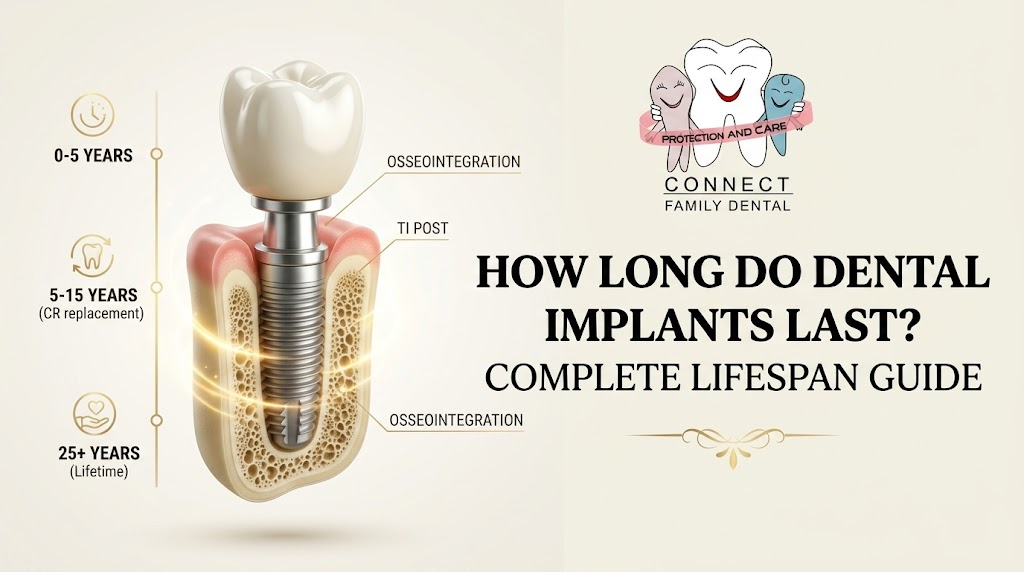
Dental implants can last 25 years or longer with proper care. The implant crown may need replacement after 10–15 years due to normal wear.
Best for:
Patients seeking long-term tooth replacementTreatment time:
Implant: 25+ years | Crown: 10–15 yearsResults:
Permanent, natural-looking tooth replacementOn This Page
Dental implants have transformed the way dentists replace missing teeth. They offer a durable, natural-looking, and highly functional solution that can restore confidence and improve oral health. Whether you have lost a single tooth or multiple teeth, dental implants provide a long-term option that closely mimics the appearance and function of natural teeth.
One of the most common questions patients ask before treatment is: How long do dental implants last? The answer depends on several factors, including oral hygiene habits, overall health, lifestyle choices, and the quality of the dental restoration. However, compared to other tooth replacement options, dental implants are known for their exceptional longevity.
What Are Dental Implants?
A dental implant is a small titanium post that is surgically placed into the jawbone to replace the root of a missing tooth. After the implant is placed, it gradually fuses with the surrounding bone through a natural healing process called osseointegration.
Once healing is complete, a connector known as an abutment is attached to the implant, followed by a custom-made dental crown. The result is a replacement tooth that looks, feels, and functions much like a natural tooth.
How Long Do Dental Implants Last?
Dental implants are designed to be a long-term solution for missing teeth. The implant post, which is placed within the jawbone, can often last 25 years or longer. Many patients keep their implants for the rest of their lives without needing replacement.
The crown attached to the implant may have a shorter lifespan because it is exposed to daily chewing forces and normal wear.
Why Are Dental Implants So Durable?
Dental implants are unique because they become integrated with the jawbone. Unlike dentures or bridges, implants are not simply placed on top of the gums. The titanium implant fuses with the bone, creating a secure foundation that functions similarly to a natural tooth root.
This integration provides several important benefits: strong support for chewing and speaking, improved stability, reduced risk of shifting, preservation of jawbone structure, and long-term durability.
Factors That Affect the Lifespan of Dental Implants
Although dental implants have an excellent success rate, their longevity depends on several important factors.
Oral Hygiene — Good oral hygiene is one of the most important factors in maintaining healthy dental implants. While implants cannot develop cavities, the surrounding gums and bone can still be affected by plaque and bacteria. Poor oral hygiene can lead to gum inflammation and a condition known as peri-implantitis.
Gum Health — Healthy gums are essential for long-term implant success. The gums create a protective barrier around the implant and help prevent bacterial infection.
Smoking and Tobacco Use — Smoking is a significant risk factor for implant complications. Tobacco products can restrict blood flow, slow healing, increase infection risk, and reduce implant success rates.
Bone Density and Jawbone Health — Successful dental implants depend on adequate bone support. The implant must be securely anchored within the jawbone to function properly.
Teeth Grinding and Clenching — Teeth grinding, also known as bruxism, can place excessive pressure on dental implants. Over time, this repeated force may damage the crown, loosen implant components, and increase wear on restorations.
Overall Health — Certain medical conditions can influence the success and lifespan of dental implants. Conditions that may affect healing include uncontrolled diabetes, severe osteoporosis, autoimmune disorders, and certain medications.
Are Dental Implants Permanent?
Dental implants are often described as a permanent tooth replacement solution. The implant post itself can remain in the jawbone indefinitely if properly maintained. However, it is important to understand that the crown attached to the implant may require replacement at some point due to normal wear and tear.
How to Make Your Dental Implants Last Longer
Proper maintenance is essential for maximizing implant longevity. Brush and floss daily, visit your dentist regularly, avoid chewing hard objects, wear a nightguard if needed, and maintain a healthy lifestyle.
Dental Implants Compared to Other Tooth Replacement Options
Dental Bridges — Traditional dental bridges typically last between 5 and 15 years. While effective, bridges rely on neighboring teeth for support and do not prevent jawbone loss.
Dentures — Dentures generally last between 5 and 10 years before requiring adjustments or replacement. Changes in jawbone structure can affect their fit over time.
Dental Implants — Dental implants offer exceptional stability, bone preservation benefits, natural appearance, long-term durability, and potential lifetime performance.
Frequently Asked Questions
Can Dental Implants Last a Lifetime?
Yes. Many patients keep their implants for decades, and some implants last a lifetime with proper care and maintenance.
How Long Does an Implant Crown Last?
Most implant crowns last between 10 and 15 years, although some may last longer depending on oral habits and care.
Do Dental Implants Require Special Maintenance?
Dental implants should be cared for similarly to natural teeth through daily brushing, flossing, and regular dental visits.
Can Dental Implants Get Cavities?
No. Dental implants cannot develop cavities. However, the surrounding gums and bone must remain healthy.
Final Thoughts
Dental implants are widely regarded as one of the most reliable and long-lasting solutions for replacing missing teeth. Their ability to integrate with the jawbone provides exceptional stability, comfort, and durability that other tooth replacement options often cannot match. While the implant crown may eventually require replacement due to normal wear, the implant post itself can often last 25 years or more and may remain functional for a lifetime.