

Quick Answer
You should contact an emergency dentist in Hamden, CT if you have severe or persistent tooth pain, a knocked-out permanent tooth, a broken tooth with pain, swelling around the gums or face, or bleeding that does not stop. Some situations require emergency medical care rather than a dental appointment — call 911 or go to the nearest emergency department if you have difficulty breathing or swallowing, rapidly spreading swelling around your face or neck, or another potentially life-threatening symptom.
Best for:
Dental emergencies and urgent dental careVisit length:
Varies by condition — most emergencies are seen on the same dayResults:
Pain relief, diagnosis, and treatment planningOn This Page
A sudden toothache, a broken tooth, or swelling around your gums can turn an ordinary day into a stressful experience. Dental problems sometimes develop gradually, but others happen without warning. Knowing when to seek emergency dental care can help you protect your teeth, manage discomfort, and avoid complications.
If you are searching for emergency dental care in Hamden, CT, it is important to understand which symptoms need prompt attention and what you should do before reaching a dentist.
Connect Family Dental, located at 953 Dixwell Ave in Hamden, Connecticut, provides emergency dental care for problems such as severe tooth pain, broken teeth, dental injuries, and suspected infections. If you are experiencing a dental problem, call (203) 745-4244 to discuss your symptoms and ask about appointment availability.
01 What Counts as a Dental Emergency?
A dental emergency is a problem involving your teeth, gums, or mouth that needs prompt professional assessment to relieve significant pain, manage an injury, or address a possible infection.
Not every dental issue requires immediate treatment. For example, a tiny chip without pain may be less urgent than a deep fracture or a tooth that has been knocked out. However, even problems that initially seem minor can worsen if the underlying damage is not assessed.
The urgency depends on your symptoms, the type of injury, and whether there are signs of infection or other complications.
1. Severe or Persistent Toothache
A toothache can begin as mild sensitivity and gradually become a constant, throbbing pain. Sometimes the discomfort becomes worse when you chew or drink something hot or cold.
Possible causes include tooth decay, a cracked tooth, damage to the inner tooth tissue, or an infection.
Contact an emergency dentist in Hamden, CT if the pain is severe, persistent, worsening, or interfering with sleep or daily activities. Do not assume the problem has disappeared simply because the pain temporarily improves.
A dentist can examine the affected tooth and determine whether treatment such as a filling, root canal, crown, or another procedure is appropriate.
2. A Knocked-Out Tooth
A permanent tooth knocked out during sports, a fall, or an accident needs immediate attention. Acting quickly can improve the chance of saving the tooth.
If this happens:
- Pick up the tooth by the crown, which is the visible part, rather than the root.
- If it is dirty, rinse it gently with milk or saline if available; do not scrub it.
- Keep the tooth moist. If you cannot place it back in its socket safely, store it in milk or a tooth-preservation solution.
- Contact a dentist immediately and seek care as quickly as possible.
Do not attempt to reinsert a baby tooth. If the injury also involves a serious head, facial, or jaw injury, seek emergency medical care.
For more guidance, read the American Association of Endodontists' advice on knocked-out teeth.
3. A Broken, Chipped, or Cracked Tooth
A tooth can break after biting something hard, falling, or receiving a blow to the face. A small chip may cause little discomfort, while a deeper fracture can expose sensitive inner layers and cause significant pain.
Rinse your mouth gently with warm water. If swelling develops, apply a cold compress to the outside of your cheek. Avoid chewing on the affected side and do not try to glue the tooth back together.
If you can find a broken fragment, bring it with you to the dental appointment.
Contact a dentist promptly, especially if the tooth is painful, has a sharp edge, or has broken near the gumline. Treatment depends on the extent of the damage and may involve bonding, a filling, a crown, or another procedure.
4. Swelling or a Possible Dental Abscess
Swelling around a tooth or gum can indicate infection. Other symptoms may include throbbing pain, a bad taste in the mouth, pus, tenderness, or fever.
A dental abscess requires prompt professional evaluation. It will not reliably resolve with home remedies alone, and antibiotics are not a substitute for necessary dental treatment.
Seek emergency medical care immediately if swelling spreads rapidly, affects the neck or area around the eye, or causes difficulty breathing or swallowing. These symptoms can indicate a serious infection.
If you suspect an abscess but do not have these emergency warning signs, contact a dentist as soon as possible.
5. Bleeding or Injury to the Mouth
Injuries to the lips, gums, tongue, and other soft tissues can happen during sports, accidents, or falls.
For minor bleeding, apply gentle, steady pressure with clean gauze. However, seek emergency medical care if bleeding is heavy or does not stop, the injury is deep, or you suspect a serious facial or jaw injury.
If the injury involves a knocked-out or displaced tooth, contact a dentist immediately after addressing any life-threatening injuries.
02 What Should You Do Before Reaching an Emergency Dentist?
Taking a few sensible steps can help protect your mouth while you arrange professional care.
Step 1: Call the dental office. Explain your symptoms, when they began, and whether you have swelling, bleeding, fever, or a dental injury. Ask about the earliest available appointment.
Step 2: Keep the area clean. Gently rinse your mouth with lukewarm water. If food is trapped between teeth, you can try gentle flossing, but do not force anything into the gum.
Step 3: Use a cold compress when appropriate. For an injury with swelling, apply a cold compress to the outside of your cheek for short intervals. Do not apply ice directly to the tooth or gum.
Step 4: Avoid making the injury worse. Do not chew on a damaged tooth, use sharp objects to remove something stuck in your mouth, or apply aspirin directly to the tooth or gums.
Step 5: Get the right level of care. Follow the dental team's instructions. If you develop difficulty breathing or swallowing, rapidly spreading swelling, or another serious symptom, call 911 or go to an emergency department.
Home care is only temporary. It cannot replace an examination when a tooth is damaged or an infection is suspected.
03 What Happens During an Emergency Dental Appointment?
Knowing what to expect can make an urgent dental visit less stressful.
Examination and diagnosis
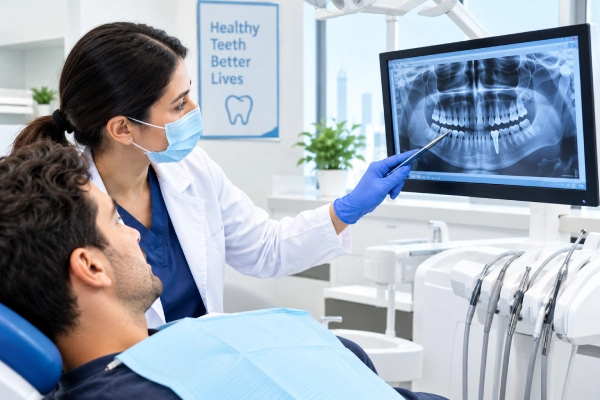
The dentist will ask about your symptoms, medical history, and how the problem started. They may examine the affected tooth and gums and recommend dental X-rays when necessary.
Pain relief and treatment planning
The dentist will explain the likely cause of the problem and discuss suitable treatment options. The immediate goal may be to relieve pain, address infection, stabilise an injury, or protect a damaged tooth.
Treatment based on the problem
Depending on the diagnosis, treatment may include a filling, a temporary restoration, a crown, root canal treatment, extraction, or another procedure. Not every dental emergency requires the same treatment.
Follow-up care
Some problems can be managed during the initial visit, while others require additional appointments. Your dentist will explain what happens next and how to care for the treated area.
04 Emergency Dental Care in Hamden, CT: Where to Get Help
If you have a painful tooth, a broken restoration, or another urgent dental concern, contact a local dental office to discuss your symptoms and appointment availability.
Connect Family Dental provides emergency dental care at:
- Address: 953 Dixwell Ave, Hamden, CT 06514
- Phone: (203) 745-4244
- Published office hours: Monday–Friday, 9:00 AM–5:00 PM
Call ahead to explain your situation and confirm availability. Do not assume the office is open outside its published hours or that a same-day appointment is guaranteed.
You can visit the Connect Family Dental emergency dental care page for more information about its services.
If you have a life-threatening symptom, do not delay medical care while trying to reach a dental office.
05 How Much Does Emergency Dental Care Cost?
The cost of an emergency dental visit depends on the examination, any X-rays needed, the condition being treated, and the procedure recommended.
For example, evaluating a chipped tooth may involve different costs from treating a dental infection or performing a root canal.
Before treatment, ask the dental office about:
- The examination fee
- The cost of any necessary X-rays
- The estimated cost of recommended treatment
- Whether your dental insurance may cover any of the services
- Available payment options
If you have insurance, bring your details to the appointment and ask the office to help you understand your expected out-of-pocket costs. Coverage varies by plan, and an estimate is not a guarantee of payment by your insurer.
Do not postpone care for a potentially serious infection solely because you are uncertain about the cost. Contact the dental office to discuss your options.
06 How Can You Reduce the Risk of Dental Emergencies?
Not every dental emergency can be prevented, but a few habits may lower your risk.
- Schedule regular dental examinations and cleanings.
- Brush twice daily with fluoride toothpaste and clean between your teeth every day.
- Wear a properly fitted mouthguard during contact sports.
- Avoid chewing ice, hard sweets, and other objects that may crack teeth.
- Do not use your teeth to open packages or cut items.
- Have damaged fillings, loose crowns, and persistent tooth sensitivity checked.
- Seek advice when you notice changes in your teeth or gums instead of waiting for the pain to become severe.
Preventive care cannot eliminate every risk, but it can help identify problems before they become more difficult to treat.
07 Frequently Asked Questions About Emergency Dental Care in Hamden, CT
When should I see an emergency dentist in Hamden?
Contact a dentist promptly for severe or persistent tooth pain, a knocked-out permanent tooth, a painful broken tooth, swelling that may indicate infection, or an injury to your teeth or gums. Seek emergency medical care for difficulty breathing or swallowing, rapidly spreading swelling, or serious facial injuries.
Can I get a same-day emergency dental appointment in Hamden, CT?
Same-day appointments depend on the dental office's schedule, staffing, and the urgency of your condition. Call Connect Family Dental at (203) 745-4244 to explain your symptoms and ask about availability.
Should I go to the emergency room for a toothache?
A dentist is generally the appropriate professional for diagnosing and treating a toothache. However, go to an emergency department or call 911 if you have difficulty breathing or swallowing, rapidly spreading facial or neck swelling, or a serious injury.
What should I do if my permanent tooth gets knocked out?
Handle it by the crown rather than the root, keep it moist, and seek dental care immediately. If you cannot safely place it back in its socket, store it in milk or a tooth-preservation solution while travelling for care.
Can a dental infection go away on its own?
A dental infection should not be left untreated. Contact a dentist promptly for evaluation. If you experience difficulty breathing or swallowing or rapidly spreading swelling, seek emergency medical care.
Does dental insurance cover emergency dental treatment?
Coverage depends on your plan, the service performed, and your policy terms. Ask the dental office and your insurer about coverage, deductibles, copayments, and any limitations before treatment when circumstances allow.
